Wandering Through the Desert’s Whisper: Ahmadi’s Untamed Beauty
Have you ever wandered somewhere that quietly steals your breath? Ahmadi, Kuwait isn’t what I expected—instead of cityscapes, I found sweeping dunes, salt flats glowing under the sun, and windswept landscapes that feel untouched. This quiet corner of Kuwait reveals a raw, natural side most never see. Let me take you through the hidden natural wonders waiting just beyond the familiar. Far from the bustling heart of Kuwait City, Ahmadi offers a rare kind of beauty—one defined not by grand monuments or tourist attractions, but by silence, space, and the subtle rhythm of desert life. Here, nature speaks in whispers, and those who listen are rewarded with moments of profound stillness and clarity.
Arrival in Ahmadi: A Gateway to the Unexpected
Ahmadi is often seen as a functional city, known primarily for its historical ties to Kuwait’s oil industry. Many travelers pass through without stopping, assuming it offers little beyond industrial infrastructure and administrative buildings. Yet just beyond the paved roads and functional architecture lies a landscape that defies expectation. As you leave the main highways and drive eastward, the change is gradual but unmistakable. The hum of engines fades, replaced by the soft rustle of desert winds. The rigid lines of urban planning give way to organic curves of sand and rock, stretching endlessly under an open sky.
What makes this transition so powerful is not just the visual shift, but the emotional one. The moment you step out of the car and feel the dry heat on your skin, the silence wraps around you like a blanket. There are no billboards, no crowds, no announcements—only the vastness of the desert and the subtle textures of the land. This is not a place built for spectacle, but for contemplation. It invites a slower pace, a deeper awareness. For those willing to look beyond the surface, Ahmadi becomes not a stopover, but a destination in its own right.
The true essence of Ahmadi’s natural appeal lies in its accessibility. Unlike remote desert regions that require special permits or guided expeditions, much of this area can be explored with careful preparation and respect for the environment. The roads leading into the outskirts are passable with standard four-wheel-drive vehicles, and local knowledge—often shared by residents or through community travel groups—can guide visitors to safe and scenic spots. The lack of formal tourism infrastructure is not a drawback; it preserves the authenticity of the experience. This is not a curated attraction, but a living landscape that has remained largely unchanged for decades.
The Beauty of Kuwait’s Eastern Desert Landscapes
East of Ahmadi, the desert unfolds in layers of quiet grandeur. This is not the stereotypical image of endless golden dunes, but a more complex and nuanced terrain shaped by wind, time, and ancient geological shifts. The ground varies from soft, wind-sculpted sands to hard-packed gravel plains, remnants of long-vanished seas. In some areas, the earth is cracked and pale, forming intricate patterns that resemble ceramic glazing. In others, low shrubs like arfaj and ghada dot the landscape, their deep roots anchoring them against relentless winds.
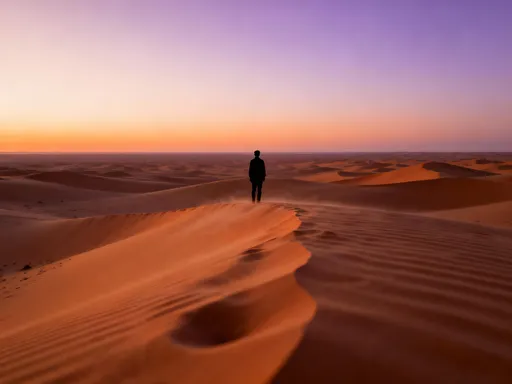
One of the most striking aspects of this region is its subtle color palette. At dawn, the sands take on a soft rose hue, gradually warming to amber as the sun climbs. By midday, the light is intense, bleaching the landscape into a near-monochrome expanse that shimmers with heat. But it is in the late afternoon that the desert reveals its full visual depth. Shadows lengthen, carving definition into the dunes, and the interplay of light and texture creates a sense of movement, as if the land itself is breathing.
What truly sets this desert apart is its silence. In a world saturated with noise—traffic, notifications, conversations—the absence of sound here is almost startling. It is not an empty silence, but a full one, rich with presence. The occasional call of a desert lark, the whisper of wind over sand, the distant rustle of a lizard darting between rocks—these small sounds become magnified, drawing attention to the delicate balance of life in an arid environment. This quiet is not just auditory; it is mental and emotional. It creates space for reflection, for slowing down, for simply being.
For photographers and nature enthusiasts, the eastern desert near Ahmadi offers endless opportunities. The lack of light pollution makes it an ideal location for astrophotography, where the Milky Way stretches across the night sky in brilliant clarity. During the day, the play of light on the dunes and salt flats provides a dynamic canvas for capturing texture, contrast, and mood. But even for those without a camera, the experience of standing in such openness—surrounded by nothing but earth and sky—is a form of art in itself.
Exploring the Coastal Fringes Near Ahmadi
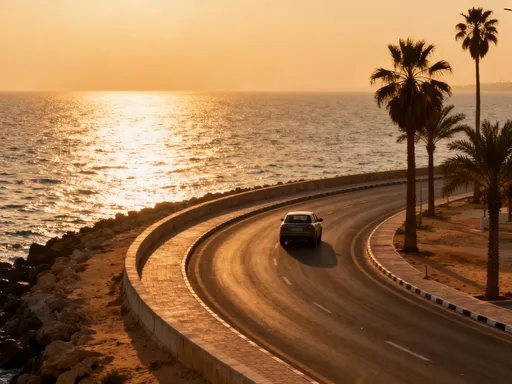
Though Ahmadi itself is not a coastal city, it serves as a gateway to Kuwait’s eastern shoreline, where the desert meets the Arabian Gulf in a striking juxtaposition. A short drive from the city’s outskirts leads to flat, saline plains and tidal zones that pulse with quiet activity. These coastal margins are often overlooked, dismissed as barren or unremarkable. Yet they possess a stark, elemental beauty that rewards closer attention.
The transition from desert to sea is gradual. The land flattens, and the soil takes on a crusty, salt-encrusted texture. Pools of brackish water collect in shallow depressions, reflecting the sky like scattered mirrors. These tidal flats are home to a surprising variety of life. Small crabs scuttle between pools, their movements quick and precise. Shorebirds—sandpipers, curlews, and herons—wade through the shallows, searching for food. In the early morning or late evening, the air fills with the soft calls of gulls and terns, their wings catching the low light as they glide effortlessly over the water.
One of the most peaceful experiences in this region is walking along the shoreline at dawn. The temperature is cooler, the light soft and golden, and the world feels newly formed. The contrast between the dry heat of the desert and the cool, briny air of the coast is invigorating. It’s a reminder that Kuwait’s natural diversity extends beyond sand and oil—it includes marine ecosystems, migratory bird routes, and fragile coastal habitats that deserve protection.
These areas are not developed for tourism, which means visitors must take responsibility for their impact. There are no trash bins, no marked trails, and no lifeguards. What exists is raw and unfiltered, and that is precisely what makes it valuable. For those who come with respect, these coastal fringes offer a rare chance to connect with nature in its most honest form. A simple walk along the water’s edge, watching the tide ebb and flow, can become a meditative experience—one that grounds the mind and renews the spirit.
The Magic of Light: Sunrise and Sunset in the Open Desert
In the open desert near Ahmadi, time is measured not by clocks, but by light. The sun governs everything—the temperature, the visibility, the mood of the landscape. And nowhere is its influence more profound than during sunrise and sunset, when the desert transforms into a living canvas of color and shadow.
At first light, the horizon glows faintly, a thin line of gold separating earth from sky. As the sun rises, long shadows stretch across the dunes, emphasizing their curves and ridges. The sand, cool from the night, begins to warm, releasing a faint, earthy scent. This is the best time to walk, when the air is still crisp and the light is soft. Every footprint leaves a clear mark, a temporary signature on the land. Photographers often favor this hour for its gentle contrast and delicate tones, but even casual observers can appreciate the sense of renewal that comes with the dawn.
Midday brings intensity. The sun climbs high, casting sharp, short shadows and bleaching the landscape into a near-white haze. This is not the time for exploration, but for rest and reflection. The heat is formidable, often exceeding 40°C (104°F) in the warmer months. Yet even in this stillness, there is beauty. The mirages that ripple above the sand create illusions of water, shifting and dissolving like dreams. The sky becomes a vast dome of pale blue, so clear it feels infinite. It is a reminder of the desert’s power—not just to challenge, but to humble.
But it is at sunset that the desert near Ahmadi reaches its peak. As the sun descends, the sky ignites in hues of orange, pink, and deep purple. The light reflects off the salt flats, turning them into shimmering mirrors that stretch to the horizon. The dunes, now in silhouette, take on a sculptural quality, their forms sharp and elegant. The air cools rapidly, and the first stars begin to appear. This moment—brief, fleeting, and deeply moving—is what draws people back again and again. It is not just a visual spectacle, but an emotional one. In that golden hour, the world feels still, sacred, and full of meaning.
Practical Tips for Wandering Responsibly
Exploring the natural landscapes around Ahmadi is a privilege, not a right. These areas are not developed tourist destinations with facilities, signage, or emergency services. They are fragile ecosystems that require care and respect. To ensure a safe and sustainable experience, visitors should follow a few essential guidelines.
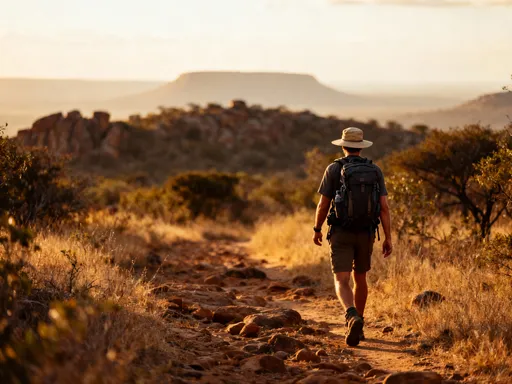
First and foremost, preparation is critical. Always carry more water than you think you’ll need—experts recommend at least four liters per person per day in hot conditions. Wear lightweight, long-sleeved clothing to protect against sun exposure, and use high-SPF sunscreen, a wide-brimmed hat, and UV-protective sunglasses. A first-aid kit, navigation tools (such as a GPS or offline maps), and a fully charged mobile phone with a backup power source are also essential.
Transportation is another key consideration. While some areas can be reached via paved roads, others require a reliable four-wheel-drive vehicle capable of handling soft sand and uneven terrain. Always check your vehicle’s condition before departure—tire pressure, fuel levels, and engine performance can mean the difference between a smooth journey and a dangerous situation. If you’re unfamiliar with desert driving, it’s wise to travel with someone experienced or to join a small group for safety.
Environmental responsibility is equally important. Avoid driving off designated tracks, as vehicle tracks can damage delicate desert crusts that take years to regenerate. Do not remove rocks, plants, or artifacts, and carry out all trash—there are no waste disposal services in these areas. Respect wildlife by observing from a distance and avoiding sudden movements or loud noises. Remember, these lands are not yours to alter, but to witness and preserve.
Finally, always inform someone of your plans. Share your route, expected return time, and contact details with a trusted person. In remote areas, mobile signals can be weak or nonexistent, so having a satellite communicator or emergency beacon is a prudent addition for longer excursions. By taking these precautions, you protect not only yourself but also the integrity of the landscape for future visitors.
Why Ahmadi’s Natural Side Matters
In an era dominated by urbanization and digital connectivity, places like Ahmadi’s desert landscapes serve as vital counterpoints. They remind us that not all value is measurable, visible, or immediate. The silence, the space, the simplicity—these are not empty qualities, but full ones, rich with meaning. They offer a rare opportunity to disconnect from the noise of daily life and reconnect with something deeper: the natural world, and ourselves.
Preserving these areas is not just about conservation; it is about cultural identity. Kuwait is often associated with modern skyscrapers, luxury malls, and oil wealth. But its geography tells a broader story—one of resilience, adaptation, and harmony with a challenging environment. The desert has shaped the lives, traditions, and values of Kuwaiti people for generations. By protecting its natural spaces, we honor that heritage and ensure it is passed on to future generations.
These landscapes also play a crucial role in biodiversity. Despite their harsh conditions, Kuwait’s deserts and coastal zones support a variety of plant and animal species adapted to extreme heat, limited water, and saline soils. Protecting these habitats helps maintain ecological balance and supports migratory bird routes that span continents. Moreover, they serve as natural laboratories for scientists studying climate adaptation, soil conservation, and sustainable land use.
On a personal level, time spent in such environments fosters mindfulness and gratitude. The vastness of the desert puts human concerns into perspective. Problems that feel overwhelming in the city can seem smaller, more manageable, when viewed under an endless sky. This sense of perspective is not escapism, but clarity. It allows for reflection, renewal, and a deeper appreciation of life’s quiet moments.
Closing Reflection: Finding Peace in the Stillness
Wandering through Ahmadi’s natural landscapes left me with a quiet kind of transformation. It was not dramatic or immediate, but gradual, like the shifting of sand over time. In the stillness, I found a space where thoughts could settle, where the mind could rest, where the heart could breathe. The desert does not offer excitement in the conventional sense—it does not thrill or dazzle. Instead, it offers presence. It asks only that you be still, that you listen, that you allow yourself to be part of something larger.
There is a deep wisdom in that silence. It teaches patience, humility, and the value of simply being. In a world that constantly demands more—more speed, more output, more noise—the desert stands as a quiet rebellion. It does not compete. It does not shout. It waits, enduring and unchanged, for those who are ready to see it.
If you ever find yourself in Kuwait, do not rush through Ahmadi. Do not assume it has nothing to offer. Step off the main road. Walk a short way into the sand. Sit quietly as the sun sets and the stars emerge. Let the wind carry away your thoughts. In that moment, you may discover what so many have found before you: that the most powerful experiences are often the quietest, and that beauty does not always announce itself—it simply exists, waiting to be noticed.