You Won’t Believe What I Ate in Santiago de Cuba
Santiago de Cuba isn’t just the heart of Cuban music and revolution—it’s a hidden kitchen pulsing with flavor. I went searching for authenticity and found myself tangled in the aroma of slow-cooked stews, smoky grilled meats, and spices passed down through generations. This city doesn’t serve meals; it shares stories on plates. From corner fritanga stands to family-run paladares, every bite felt like a secret I was lucky to taste. There was no performative tourism here, no reheated dishes for foreign palates. Instead, there was honesty in every simmering pot, a rhythm in the way food moved from hand to plate, from market to table. In Santiago, eating is not a transaction—it’s participation in a culture that has turned resilience into richness, scarcity into soul.
The Soul of Santiago: Where Food Meets Identity
Santiago de Cuba carries a culinary identity that is distinct, deep-rooted, and shaped by centuries of convergence. Unlike Havana, where international influences and tourism have subtly reshaped menus, Santiago remains fiercely local. Its food reflects a blend of Taino, African, and Spanish traditions that have not been diluted by mass appeal. Nestled between the Sierra Maestra mountains and the turquoise Caribbean, the city’s geography has long influenced its diet—mountain herbs infuse stews, while coastal access ensures fresh fish remains a staple. The African heritage, particularly from Haitian and Jamaican migrants who arrived during the colonial and post-colonial periods, brought slow-cooking techniques, the use of root vegetables, and a love for bold, peppery flavors that define much of the city’s cuisine today.
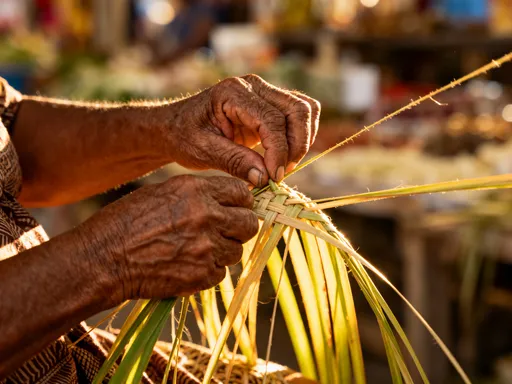
What sets Santiago apart is not just what is cooked, but how it is preserved. Decades of economic isolation and limited infrastructure have, paradoxically, protected its food culture from homogenization. Without the pressure to cater to global tastes or fast-food chains, the city has maintained a culinary rhythm that is deeply personal and community-based. Meals are still prepared with time, care, and intention—often using methods passed down from grandmothers who cooked over wood fires. This continuity is not by design, but by necessity, and it has become Santiago’s quiet strength. The city’s food is not a performance for visitors; it is a daily act of cultural survival and celebration.
The influence of the Taino people, the island’s original inhabitants, persists in the use of cassava, corn, and cooking techniques like barbacoa—slow roasting over open flames. African contributions are evident in the frequent use of plantains, yams, and okra, as well as in dishes like ajiaco, a hearty stew that varies from household to household but always centers on available ingredients. Spanish elements appear in the use of garlic, onions, and cured pork, often combined in sofrito—the aromatic base of many Cuban dishes. In Santiago, these influences don’t just coexist; they interweave seamlessly, creating a cuisine that is greater than the sum of its parts. It is a living archive of history, where every meal echoes the resilience and creativity of its people.
Street Bites That Speak Volumes: The Unofficial Cuisine
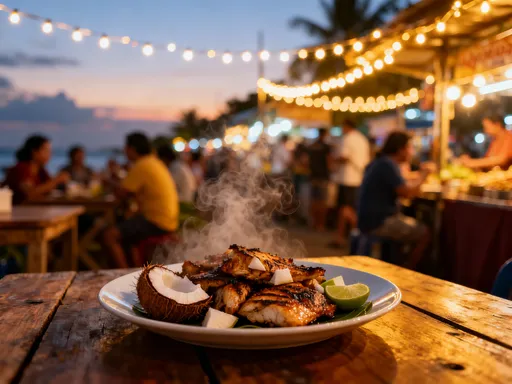
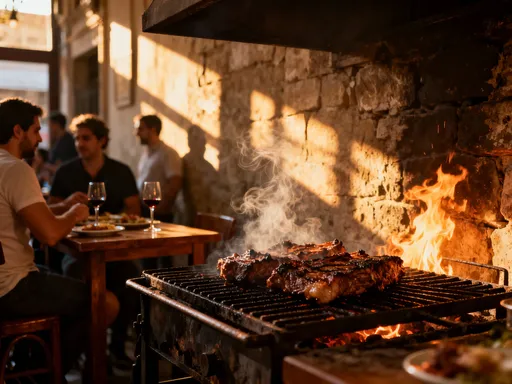
If Santiago’s soul lives in its food, then its heartbeat can be found on the street corners at dusk, where smoke curls from grills and the scent of frying pork fat fills the air. This is where locals gather not for spectacle, but for sustenance and connection. The city’s unofficial cuisine—sold from makeshift stands, window counters, and sidewalk grills—tells a story of ingenuity and daily rhythm. These are not tourist traps; they are essential nodes in the city’s food network, where working men and women stop after long shifts, children buy snacks on their way home, and neighbors exchange news over shared plates.
The fritanga is the undisputed king of Santiago’s street food. More than a menu, it’s a concept—a collection of fried delights served on paper plates or tucked into crusty Cuban bread. A typical fritanga spread includes chicharrones (crispy fried pork belly), morcilla (blood sausage seasoned with cumin and garlic), malanga fritters, and plantain chips. Each vendor has their own variation, often guarded like a family recipe. One stand near Parque Céspedes, run by a woman known only as Doña Rosa, draws lines every evening for her spicy garlic-marinated chicharrones. She fries them in batches over a charcoal grill, the crackle of fat blending with the sound of son music drifting from a nearby radio. There is no menu board, no prices listed—regulars simply nod, and she knows what they want.
Another beloved staple is pan con minuta, a sandwich filled with a thin, seasoned beef patty that resembles a Cuban take on a Salisbury steak. Unlike the overstuffed sandwiches found in other cities, this version is humble and precise—two slices of soft white bread, a single patty, a smear of garlic sauce, and sometimes a slice of tomato if in season. It’s not fancy, but it’s deeply satisfying, especially when eaten standing up on a dimly lit corner, watching the city come alive at night. The experience is as important as the food itself—the warmth of the bread, the sizzle still audible in the meat, the way a stranger might offer a small smile as you both wait your turn. In these moments, food becomes a quiet language of belonging.
Paladares with Personality: Eating Like Family
In the early 1990s, Cuba introduced a wave of self-employment reforms that allowed private citizens to open small businesses, including restaurants known as paladares. These were initially modest, often operating out of family homes with no more than a dozen seats. In Santiago, many remain exactly that—intimate, unmarked, and deeply personal. They are not franchises or themed eateries; they are someone’s dining room, kitchen, and life’s work. To eat at a paladar in Santiago is not to dine out, but to be invited in.
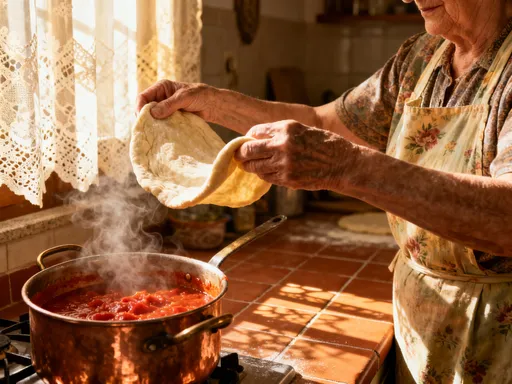
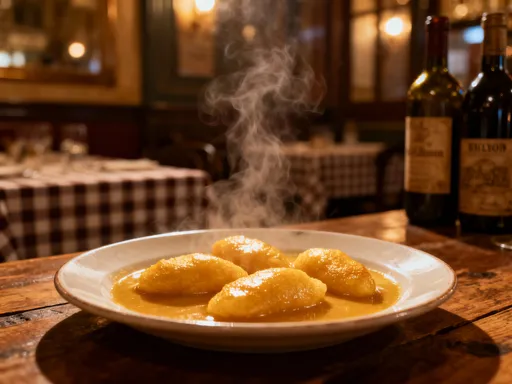
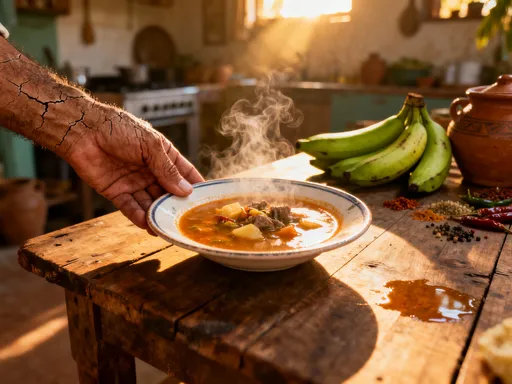
One such place, tucked behind a blue door on Calle Heredia, is run by a retired schoolteacher named María and her daughter, Lila. They serve only dinner, and only to eight guests at a time. There is no website, no reservation system—only word of mouth and a phone number scribbled on a piece of tape by the gate. The meal begins with a glass of homemade guava juice, sweet and slightly tangy, followed by a starter of fried yuca with a garlic-mojo dip. The main course is often ajiaco, a stew that changes with the season but always includes some combination of chicken, pork, corn, plantains, and root vegetables like boniato and ñame. It is cooked for hours, the broth rich and golden, the meat falling apart at the touch of a spoon.
What makes the experience transformative is not just the food, but the conversation. María moves between tables like a hostess at a family gathering, explaining how her grandmother taught her to roast pork with sour orange and oregano, or how the recipe for moros y cristianos—black beans and rice cooked together with onions and bay leaf—was passed down from her husband’s side, originally from Haitian ancestors. The dish is more than a staple; it’s a symbol of unity, its name referencing Moors and Christians living side by side. Here, food is not just nourishment; it is memory, identity, and continuity. The plates are mismatched, the lighting soft, and the air thick with the scent of cumin and wood smoke. You don’t leave feeling full—you leave feeling seen.
Markets as Kitchens: Inside Santiago’s Food Hubs
To understand Santiago’s cuisine, one must walk its markets—the true engines of its food culture. These are not curated farmer’s markets for tourists, but bustling, sensory-overload spaces where the city’s daily rhythm is set. The Mercado de Castillo, perched near the bay, is a labyrinth of stalls under corrugated metal roofs, where vendors call out prices in rhythmic cadence and customers haggle with practiced ease. The air is thick with the smell of ripe mangoes, salted cod, and freshly chopped cilantro. This is where meals begin—not in supermarkets with plastic-wrapped convenience, but in the careful selection of what is available, what is fresh, and what can be transformed.
Plantains dominate the produce stands, their skins ranging from green to deep black, each stage destined for a different dish. Green plantains become boiled or fried tostones; ripe ones are sweet maduros, caramelized in a pan with a touch of butter and cinnamon. Root vegetables like yuca, malanga, and ñame are stacked in pyramids, their rough skins a testament to their earthbound origin. Fishermen arrive early with the day’s catch—red snapper, grouper, and octopus—still glistening with seawater. Poultry and pork are sold in small portions, often pre-marinated in sour orange and garlic, ready for the grill or stew pot. Nothing is wasted; even the bones will be saved for broth.
Shopping here is an act of creativity under constraint. Due to limited imports and distribution challenges, ingredients are not always predictable. A vendor might have tomatoes one week and none the next. This unpredictability forces cooks to adapt, to rely on what is at hand, and to improvise with skill. A dish that calls for bell peppers might instead use roasted eggplant; a soup might substitute dried beans for fresh. This is not compromise—it is resourcefulness. The market teaches flexibility, respect for seasonality, and a deep appreciation for what the land and sea provide. It is also a place of community, where vendors remember your preferences, where children run between stalls, and where a shared joke over a misshapen potato can turn into a moment of connection.
Coffee, Rum, and Community: The Rituals Behind the Meal
In Santiago, no meal is complete without a small cup of cafecito—strong, sweet Cuban coffee served in a tiny glass. It arrives after the last bite, not as an afterthought, but as a closing ritual. The coffee is brewed in a stovetop espresso maker, the grounds finely ground, the water boiling fast. Sugar is added during brewing, creating a thick, amber-colored espuma on top. It is hot, intense, and meant to be sipped slowly, even if only for a few minutes. This moment—brief as it may be—is sacred. It is when stories are shared, when tensions ease, when the day is reflected upon.
Rum plays an equally important role, not as a party drink, but as a social lubricant and cultural emblem. Santiago is home to some of Cuba’s most respected rum distilleries, and the spirit flows in small bars known as bodeguitas. One favorite, tucked down a narrow alley near the cable car station, has no sign and only four stools. The owner, a man named Ernesto, pours aged rum into chipped glasses and listens more than he speaks. Customers come not just for the drink, but for the conversation—about music, about family, about the price of plantains that week. The rum is smooth, amber, and slightly sweet, best enjoyed neat or with a single ice cube if available. It is not consumed in excess, but with respect—for the craft, for the moment, for the company.
Another local favorite is guarapo, freshly pressed sugarcane juice, often served with a splash of rum or lime. Sold at street carts near bus stops and markets, it is a refreshing, natural energy boost. Watching the cane being fed through an old iron press, the green stalks crushed into pulp, the sweet liquid dripping into a glass—this is food as process, as connection to the land. These drinks are not just flavors; they are rituals that bind people together. They slow time, create space for presence, and turn ordinary moments into something meaningful. In a world that often values speed over substance, Santiago’s drinking culture is a quiet rebellion—a reminder that the best things in life are meant to be savored, not rushed.
Beyond the Plate: How Food Moves in Santiago
The journey of food in Santiago is as compelling as the flavors themselves. With limited refrigeration, inconsistent supply chains, and few large grocery stores, the path from farm to table is anything but linear. Yet, the system works—through networks of trust, ingenuity, and community cooperation. Urban gardens, known as organopónicos, dot vacant lots and rooftops, growing lettuce, tomatoes, and herbs in raised beds filled with compost. These small plots, often managed by neighborhood collectives, supply fresh produce to local markets and paladares, reducing dependence on distant farms.
State-run distribution centers play a role, but their offerings are often limited to basic rations—rice, beans, sugar, and occasional meat or oil. This is where personal networks become essential. A cousin with access to a government warehouse might bring home extra chicken. A neighbor with a backyard pig might share a cut with close friends. Fishermen sell directly from their boats or through word-of-mouth buyers. These informal systems are not loopholes—they are lifelines, ensuring that food continues to circulate even when official channels falter.
Transportation is another challenge. With few refrigerated trucks, perishable goods must move quickly. Vendors arrive at markets before dawn, using bicycles, carts, or shared taxis to bring their goods. Once sold, ingredients travel home in plastic bags, woven baskets, or repurposed containers. There is little waste, not out of ideology, but necessity. Leftovers become tomorrow’s soup; stale bread is fried into migas; vegetable peels go to compost or animal feed. This is a cuisine shaped by pragmatism, yet elevated by care. Every step of the process—from planting to cooking to sharing—reflects a deep respect for food as a precious resource. It is not taken for granted, and that reverence shows in every bite.
Why This Cuisine Deserves the World’s Attention
Santiago de Cuba’s food culture is not a novelty to be consumed and discarded. It is a living tradition, resilient and rich, born of history, geography, and human ingenuity. While other cities chase culinary trends, Santiago remains rooted in what matters—flavor, family, and authenticity. Its cuisine does not need to be exoticized or romanticized; it simply needs to be seen for what it is: a profound expression of culture in motion.
As global travel resumes and more visitors seek “authentic” experiences, there is a risk that Santiago’s food culture could be diluted—turned into a performance for cameras rather than a practice for communities. That is why mindful, respectful tourism matters. It means choosing family-run paladares over hotel buffets, asking vendors about their ingredients, learning a few words of gratitude in Spanish, and understanding that every meal is part of a larger story. It means listening more than photographing, participating more than observing.
This is not a cuisine that will change quickly, but it will change. And when it does, something irreplaceable may be lost—not just recipes, but the quiet moments of connection they foster. The world should pay attention not because Santiago’s food is “discovered,” but because it has always been here, strong and steady, waiting to be understood. To eat in Santiago is not just to taste food—it is to taste history, resilience, and the enduring power of community. Before the rhythm shifts, before the smoke from the street grills fades into memory, go. Sit at a corner table. Order the ajiaco. Share a cafecito. And let the city feed not just your body, but your soul.