You Won’t Believe What I Found Hiking Near Neuschwanstein Castle
You know that fairytale castle everyone raves about? Yeah, Neuschwanstein. I went thinking I’d just snap a few pics and head back, but what I discovered in the surrounding woods and meadows was mind-blowing. The natural areas around the castle are absolutely stunning—wildflower fields, hidden forest trails, and panoramic views that’ll stop your scroll. But honestly, most tourists miss it all. They rush in, queue for photos, then rush out, never stepping beyond the paved path. I made every mistake so you don’t have to. This isn’t just about avoiding crowds—it’s about reclaiming the magic of travel, one quiet trail at a time.
The Castle That Started It All – More Than Just a Postcard
Neuschwanstein Castle stands like a dream carved in stone, perched high above the Bavarian countryside with turrets piercing the sky. Commissioned by King Ludwig II in the late 19th century, it was never meant to be a tourist attraction. Instead, it was a private refuge—a romantic escape inspired by medieval legends and Wagnerian operas. Today, however, over 1.4 million visitors flock here each year, drawn by its fairy-tale silhouette that has graced postcards, calendars, and even Disney’s Sleeping Beauty Castle. The irony is palpable: a place built for solitude now thrives on spectacle.
Most travelers follow the same well-worn route: arrive by shuttle, join the line for a castle tour, snap a photo from Marienbrücke bridge, then leave. While the architecture and interiors are undeniably impressive, this checklist approach often blinds people to the landscape that frames the castle. The surrounding region—nestled in the Alp Valley near Füssen—is rich with ancient forests, rushing streams, and rolling meadows that change color with the seasons. These natural wonders are not just background scenery; they are integral to the region’s charm and tranquility.
The problem isn’t that people visit Neuschwanstein—it’s that so many stop at the surface. They see the castle as an icon, not as part of a larger, living environment. This tunnel vision leads to overcrowding at key spots, long waits, and a rushed experience that leaves little room for wonder. By focusing only on the man-made marvel, visitors miss the quiet magic of the wild spaces just steps away—spaces that offer solitude, beauty, and a deeper connection to the region’s soul.
The Hidden World Beyond the Ticket Line
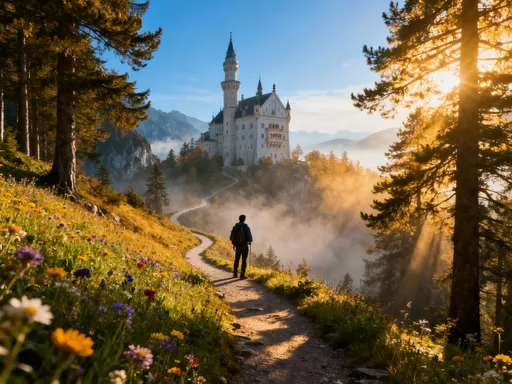
Just beyond the castle gates, the landscape unfolds into a network of trails that wind through dense pine forests, across wooden footbridges, and alongside crystal-clear mountain streams. These paths lead to meadows blanketed in gentians, buttercups, and edelweiss during summer, while autumn paints the hills in warm golds and reds. The air carries the scent of damp earth and pine resin, and the only sounds are the rustle of leaves, the distant call of a cuckoo, and the occasional chime of cowbells from nearby alpine pastures.
One of the most rewarding routes begins in Hohenschwangau, the village at the base of the hill, and follows the Alp River toward the Pöllat Gorge. Here, the water crashes through narrow rock formations, creating small waterfalls and misty pools. A well-marked footpath clings to the cliffside, offering glimpses of Neuschwanstein through the trees—a view far more intimate than the crowded bridge. Further on, the trail climbs gently to the ruins of Falkenstein Castle, another of Ludwig’s unrealized dreams, now cloaked in ivy and silence.
Another hidden gem is the loop around Alpsee Lake, a glacial lake reflecting the surrounding peaks like a mirror. Families picnic on the grassy shores, children paddle in the shallows, and hikers pause to breathe in the stillness. Unlike the castle grounds, where every movement feels choreographed, these natural spaces invite spontaneity. You can sit on a rock, skip stones, or simply close your eyes and listen to the wind. These moments of quiet are not distractions from the journey—they are the journey.
The biodiversity in this region is remarkable. Red deer roam the higher forests, while foxes and badgers slip through the underbrush at dusk. Birdwatchers might spot green woodpeckers, black storks, or even golden eagles soaring above the ridges. In spring, the forest floor blooms with wild garlic and orchids. These details don’t make headlines, but they are what transform a visit from a sightseeing stop into a sensory experience—one that lingers long after the photos fade.
Pitfall #1: Sticking to the Main Path
The most common mistake visitors make is staying on the paved, signposted routes designed for mass tourism. While these paths are safe and accessible, they also lead directly to bottlenecks—especially Marienbrücke, the famous bridge offering the classic castle view. By mid-morning, it’s often packed with tour groups, selfie sticks, and impatient guides urging people to move quickly. The experience becomes less about appreciation and more about endurance.
But just a few minutes off the main trail, the atmosphere shifts dramatically. A lesser-known path, marked only by a small wooden sign near the ticket center, leads uphill through a mixed forest of beech and fir. After about 15 minutes, it opens onto a grassy knoll with an unobstructed view of Neuschwanstein framed by mountain peaks. There are no railings, no crowds, and no time limits. You can sit, sketch, photograph, or simply be. This spot isn’t secret—it’s just overlooked by those who don’t read maps or wander beyond the obvious.
Another alternative is the trail from Bannwaldsee, a quiet lake about 30 minutes’ walk from Hohenschwangau. The path circles the lake and then climbs into the hills, offering panoramic views of the entire valley. From here, you can see both Neuschwanstein and Hohenschwangau Castles nestled in the landscape, surrounded by forests and meadows. It’s a perspective rarely seen in travel brochures but deeply rewarding for those who seek it.
The lesson is simple: signage doesn’t always lead to the best views. Some of the most breathtaking vantage points have no plaques, no benches, and no shuttle stops. They require a bit of curiosity, a decent pair of shoes, and a willingness to walk a little farther. The reward? Solitude, beauty, and the sense of discovery that makes travel meaningful.
Pitfall #2: Timing It Wrong – Crowds, Weather, and Light
Timing can make or break a visit to Neuschwanstein and its surroundings. Most tourists arrive between 10 a.m. and 2 p.m., drawn by convenience and tour schedules. This means the parking lots, shuttle buses, and main trails are at their busiest during these hours. By arriving early—ideally between 7 and 8 a.m.—you can beat the rush, enjoy cooler temperatures, and experience the landscape in the soft, golden light of dawn.
Morning light does more than enhance photos; it transforms the mood. Mist rises from the Alp River, clinging to the trees like ghostly veils. The castle emerges slowly from the haze, its towers glowing in the rising sun. Birdsong fills the air, and the trails are nearly empty. This is when the forest feels alive in a way that’s hard to describe—a quiet energy that settles into your bones. Similarly, late afternoon offers warm, slanting light perfect for photography and a gentler pace as day-trippers begin to leave.
Weather also plays a crucial role. While clear skies are ideal for views, overcast days can add drama and depth to the landscape. A light fog can make the castle appear to float above the valley, creating an almost surreal effect. Rain, while inconvenient, brings out the vibrant greens of the foliage and fills the streams to their banks. The key is preparation: checking the local forecast before departure, dressing in layers, and carrying a lightweight rain jacket can turn a potentially ruined hike into a memorable adventure.
Trail conditions vary with the season. Spring brings mud and slippery paths, especially on shaded slopes. Summer can be hot in the lower areas, making early hikes more comfortable. Autumn offers crisp air and colorful foliage but shorter daylight hours. Winter, while beautiful, requires caution—some trails are not maintained, and snow can make navigation difficult without proper gear. Planning around these factors ensures a safer, more enjoyable experience.
Pitfall #3: Underestimating the Terrain
One of the biggest misconceptions about hiking near Neuschwanstein is that it’s easy. After all, the main path to the castle is paved and well-maintained. But venture beyond, and the terrain changes quickly. Trails become narrow, rocky, and uneven. Roots twist across the path, loose stones shift underfoot, and sudden drops appear with little warning. What looks like a gentle walk on a map can involve significant elevation gain—up to 300 meters on some routes.
I learned this the hard way during my first visit. Eager to reach a scenic overlook, I took a side trail marked only by a faded sign. Within minutes, the path steepened, and the ground turned to loose gravel. My sneakers, fine for city walking, offered no grip. Halfway up, I slipped on a wet rock and caught myself just in time. It wasn’t a serious fall, but it was a wake-up call. Without proper hiking shoes, a water bottle, or even a basic map, I had put myself at unnecessary risk.
Now, I never hike without essentials: sturdy footwear with good tread, at least one liter of water, a small backpack with a rain layer, and a downloaded offline map. Even short hikes in this region can be physically demanding, especially in warm weather. Altitude, sun exposure, and uneven ground all contribute to fatigue. Children and older adults may need more frequent breaks. And while the trails are generally well-marked, it’s easy to miss a turn, especially in dense forest where GPS signals weaken.
The good news is that preparedness transforms the experience. With the right gear and mindset, even moderate hikes become accessible and enjoyable. The local tourism office provides free trail maps and condition updates, and many hotels offer hiking packages with equipment. Respecting the terrain doesn’t mean avoiding adventure—it means embracing it safely.
How to Explore Like a Local – Practical Tips for a Better Experience
To truly enjoy the Neuschwanstein region, think like a local. Start by parking in Hohenschwangau instead of the main visitor lot. It’s slightly farther from the castle entrance, but it’s less crowded and puts you closer to the trailheads. Better yet, take the regional bus from Füssen—it’s inexpensive, eco-friendly, and drops you right at the village center. This small shift in planning can save time and reduce stress.
Begin your day early. Aim to start hiking by 7:30 a.m. to enjoy the quiet and cooler temperatures. Combine your castle visit with a loop trail—perhaps the route from Marienbrücke down to Pöllat Gorge, then back through the forest to Hohenschwangau. This avoids backtracking and offers varied scenery. If you have time, add a stop at Alpsee Lake for a peaceful break before or after your main hike.
Pack smart: bring water, a light snack, sunscreen, and a hat. A small first-aid kit and a whistle are wise additions, especially if hiking with children. While the temptation is to carry everything, remember that less is often more. A lightweight daypack is sufficient for essentials. Avoid loud music or phones—let the natural sounds fill the space.
Respect the environment. Stay on marked trails to protect fragile vegetation. Carry out all trash—even biodegradable items like apple cores can disrupt local ecosystems. Keep dogs on leashes to prevent disturbances to wildlife. And remember: this landscape is not just a backdrop for photos. It’s a living, breathing place that deserves care and reverence.
Finally, talk to locals. The staff at small cafes, guesthouses, and information centers often share tips you won’t find online. A woman at a bakery once told me about a hidden path behind the church that led to a centuries-old lime tree—now one of my favorite spots. These small connections enrich the journey in ways no guidebook can.
Why This Matters – Reconnecting with Nature Through Travel
In an age of instant uploads and curated feeds, the true value of travel is at risk of being lost. We chase the perfect shot, the viral moment, the checklist of must-see sights. But real connection comes not from capturing moments, but from being present in them. The quiet meadow, the unexpected view, the sound of water over stone—these are the experiences that stay with us, not because they’re shareable, but because they’re sacred.
Hiking near Neuschwanstein taught me that wonder doesn’t require grand gestures. It comes from stepping off the path, both literally and metaphorically. It’s in the choice to move slowly, to look closely, to listen. When we prioritize curiosity over convenience, we rediscover the heart of exploration. We stop consuming destinations and start experiencing them.
This mindset shift has ripple effects. It fosters respect for nature, encourages sustainable travel habits, and deepens our appreciation for cultural landscapes. The forests around Neuschwanstein are not just scenic—they’re part of a fragile ecosystem shaped by centuries of human and natural interaction. By treading lightly and traveling mindfully, we help preserve these spaces for future generations.
So the next time you plan a trip to a famous destination, ask yourself: am I here to see, or to feel? Can I allow myself to wander, to get slightly lost, to discover something no one told me about? The castle will always be there, majestic and photogenic. But the wildflowers in the meadow, the fog in the valley, the silence of the forest at dawn—those are fleeting gifts, offered only to those who look beyond the postcard.
Let your journey be more than a checklist. Let it be a conversation with the land, a moment of stillness in a noisy world. The real magic isn’t in the castle’s towers—it’s in the quiet spaces between them, waiting to be found.